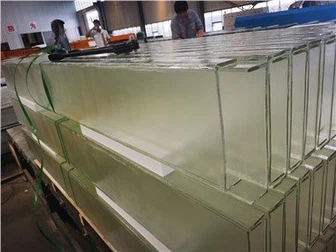
Why Does U-Shaped Glass Change Color?
As a commonly used architectural decorative material, U-shaped glass is expected to withstand wind, sun, and rain while maintaining a stable appearance over the long term. However, in practical applications, some U-shaped glass may experience discoloration. Through concept clarification, aging experiments, and data comparison, we have identified the key underlying causes and clarified the durability differences between different products. This can be understood from the following four aspects: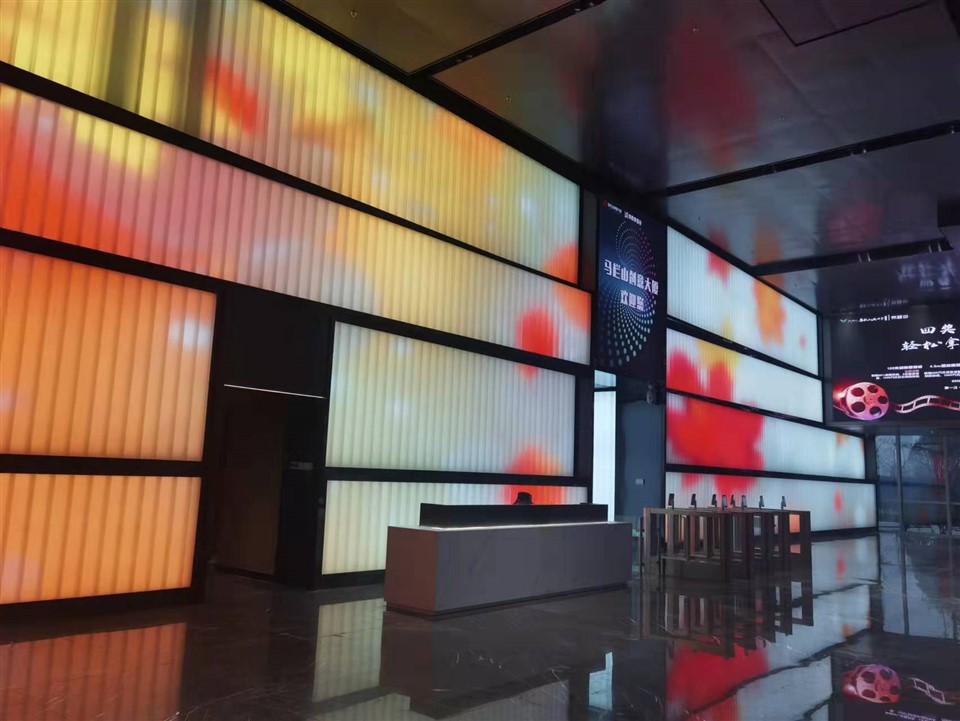
1. First, Grasp the "Fundamental Logic" of Glass Color and Aging
To understand why U-shaped glass discolors, we first need to clarify two core concepts:
1.1 Why does glass have color?
U-shaped glass is a transparent material, and its color is determined by the visible light it can transmit. For example, if glass appears green, it is because it absorbs red and blue light from sunlight and only allows green light to reach our eyes. Sunlight contains not only visible light (red, orange, yellow, green, etc., visible to the naked eye) but also invisible ultraviolet (UV) rays-the key driver of glass discoloration.
1.2 The composition of U-shaped glass hides discoloration risks
The main raw material for producing U-shaped glass is sand, which naturally contains iron (in the form of ferrous ions, Fe²⁺), giving the glass a green tint. To correct this color, some manufacturers add rare earth oxidizers (e.g., cerium dioxide), which can make the glass slightly yellow. They then add compounds like selenium or manganese to neutralize the yellow, resulting in a "foggy white" glass (not completely transparent) with reduced light transmittance.
A bigger issue is that rare earth oxidizers undergo "photodegradation" (a physical reaction where materials discolor when exposed to high-energy electromagnetic waves) when exposed to UV rays in sunlight. If U-shaped glass is used for curtain walls or exterior walls, it may discolor and lose luster in 1–2 years. Moreover, since sunlight exposure varies across different parts of the curtain wall, "color unevenness" (some areas darker and others lighter) may occur after a few years.
In contrast, commonly used float glass (e.g., regular white or ultra-white float glass for curtain walls) either uses no oxidizers or no low-quality bleaching agents, so it barely discolors due to UV exposure.
2. Verify with Experiments: How Much Do Different U-Shaped Glasses Differ After Aging?
To observe the aging of U-shaped glass in a tangible way, we selected 3 samples (named ASG, A, and B; ASG is produced by Appleton) for experiments. The core approach was "simulate long-term sunlight exposure + measure changes in light transmittance":
2.1 How to simulate "wind, sun, and rain"? Use a UV weathering test chamber
We used a 313-nm fluorescent tube UV weathering test chamber. The short-wave UV rays it emits are stronger than natural sunlight, with 24 hours of exposure equivalent to 3 months of outdoor UV exposure. We exposed the samples for 480 hours (simulating 5 years) and 960 hours (simulating 10 years) to accelerate glass aging.
2.2 How to measure changes? Use a professional spectrophotometer
We used a Shimadzu SolidSpec-3700/3700DUV spectrophotometer, which can accurately measure the "light transmittance" of visible light of different wavelengths through the glass. A larger change in light transmittance indicates a more obvious change in glass color.
3. Experimental Results: The Gap Between High-Quality and Low-Quality U-Shaped Glass Is Obvious
After 960 hours of aging (simulating 10 years), the 3 types of glass showed significant differences:
ASG (Appleton) U-shaped glass: It had the highest overall light transmittance, the smallest decrease in transmittance after aging, almost no visible color change, and the best stability.
U-shaped glass from Manufacturer A: Its light transmittance was lower than that of ASG. After aging, the transmittance decreased more significantly-especially for violet light, which could barely pass through. The glass turned a dull yellow-brown.
U-shaped glass from Manufacturer B: It had the lowest initial light transmittance and looked like it was covered with a layer of fog. After aging, not only did its transmittance decrease further, but it also turned bluish-green because red light could not pass through. This sample had the most severe discoloration.
In short: U-shaped glass with high initial light transmittance tends to have less discoloration after aging. In contrast, products with low initial transmittance (due to the addition of low-quality bleaching agents) are prone to "uglification" after a few years of use.
4. Final Conclusion: When Choosing U-Shaped Glass, Don't Just Focus on "Immediate Appearance"
When selecting U-shaped glass, you should not only focus on its color and transparency when newly purchased but also prioritize long-term durability:
Prioritize products with high initial light transmittance and a "crystal-clear" appearance. Avoid glass with an inherent "foggy white appearance"-such glass may contain low-quality additives and is prone to discoloration later.
Pay attention to whether the manufacturer uses high-quality raw materials (e.g., controlled iron content, no low-quality bleaching agents). Remember: The core cause of U-shaped glass discoloration is the "reaction between oxidizers/bleaching agents in raw materials and UV rays." Therefore, choosing the right product can help avoid troubles like "color unevenness and fading" after a few years of use.
If you need to apply this content to formal documents (e.g., technical reports or product manuals), I can help optimize the terminology consistency and adjust the structure to meet academic or industrial standards. Would you like me to do that?