

Low Iron U-profile glass is white or extra clear in appearance not having the green properties seen in the original range. The low iron product range was introduced to satisfy an architectural desire for a neutral aesthetic able to complement a host of environments and other building materials.
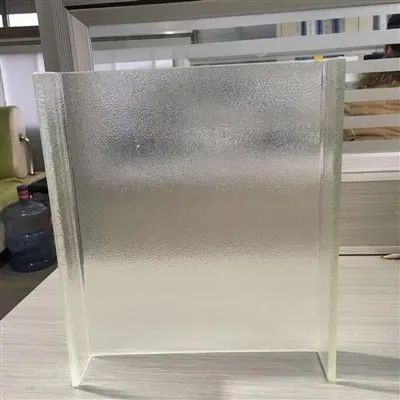
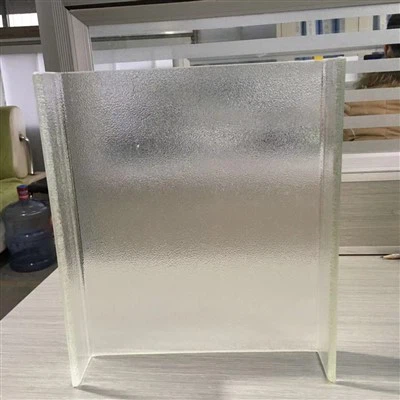
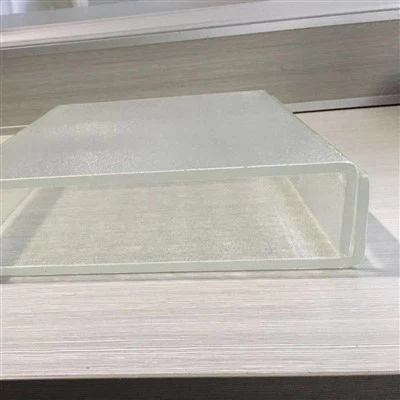


Advantages of Low Iron U Profile Glass
Clarity
Low-iron glass has a higher level of transparency and clarity than standard float glass due to its reduced iron content. This means that objects seen through low-iron glass appear more vibrant and true to their natural colors.
Light transmission
Low-iron glass has a higher light transmission than standard glass. This makes it ideal for use in applications where natural light is important, such as in glazed facades, double skin facades, and solar panels.
Aesthetics
The reduced iron content in low-iron glass also reduces the greenish tint that is often visible in regular glass, especially when looking at the edges of the glass, giving it a more elegant and sophisticated appearance. This makes it an ideal choice for applications where a clean look is important, such as in architectural projects and decorative glass applications.
Performance
Just like standard glass, low-iron glass can be further processed into laminated or coated glass to add security, solar control, or thermal insulation properties.
Why Choose US
Our Factory
Yongyu Glass was founded by Gavin Pan, who has worked in the architectural glass industry since 2006 and has more than fifteen years' North American and E.U. market export experience. The company was established with a wish to integrate the advantage resources of building the region's glass industry and provide personalized solutions to the needs of our customers. We find personalized solutions for the customers' demands and help customers save time and money.
Our Product
High-performance low iron U glass systems.
(U glass, also called U channel glass/U profile glass/C-glass).
Ice rink glass system (1/2", 5/8" tempered glass, laminated glass).
Jumbo safety glass.
(Jumbo tempered glass, Jumbo tempered laminated glass, Jumbo IGU).
Curved safety glass.
(Curved tempered glass, Curved tempered laminated glass, Jumbo curved safety glass max 12.5 meters tall).
SGP laminated glass.
Rich Experience
Engaged in the architectural glass industry and served customers both home and abroad for more than 15 years.
Help glass facades companies and architectural designers find personalized solutions and help them save time and money.
Our Service
We are SGCC approved supplier; our products are meet the primary standards of building glass products. Convenient communication, the whole production process can be traced back, 7*24h after-sale service is our promise.
Installation of U-Glass
(1) The frame material is fixed in the building opening with expansion bolt or shooting nail, and the frame can be connected with right angle or material angle. There should be at least 3 fixed points on each side of the border. The upper and lower frame materials should have a fixed point every 400-600.
(2) Cut the plastic part with stabilizing effect into corresponding length and put it into the upper and lower profiles in the frame.
(3) When u-shaped glass is installed into the frame, the inner surface of the glass should be carefully cleaned.
(4) Insert the u-shaped glass in turn. The depth of u-shaped glass inserted into the upper frame should be greater than or equal to 20, the depth of u-shaped glass inserted into the lower frame should be greater than or equal to 12, and the depth of u-shaped glass inserted into the left and right frames should be greater than or equal to 20. When the u-shaped glass is inserted to the last piece and the opening width is inconsistent with the glass width, cut the glass along the length direction, adjust and install the loaded glass according to the 18th “installation sequence of end glass”, and cut the plastic part into the corresponding length and put it into the side of the frame.
(5) Insert an elastic pad into the gap between the frame and the glass, and the contact surface between the pad and the glass and the frame shall not be less than 10.
(6) The joints between the frame and the glass, between the glass and the glass, and between the frame and the building structure shall be sealed with glass glue elastic sealing material (or silicone glue). The narrowest part of the elastic sealing thickness between the glass and the frame shall be greater than or equal to 2, and the depth shall be greater than or equal to 3; the elastic sealing thickness between u-shaped glass blocks shall be greater than or equal to 1, and the sealing depth toward the outdoor side shall be greater than or equal to 3.
(7) After all the glass is installed, the dirt on the surface shall be removed.

Applications of Low-Iron Glass
Low-iron glass is the base glass for many applications. It can be further processed to provide enhanced performance, aspects or shapes, whether for interior design or exterior architectural applications.
Curtain walls
Low-iron glass can be coated with high performance coatings to curtain wall façades with a neutral, crystal clear look, as well as a higher level of light transmission compared to standard float glass with similar coatings. Its use is especially interesting in double skin facades to help keep high natural light transmission despite the number of glazings and their thickness.
Storefronts
Due to its higher light transmission and color neutrality, low-iron glass allows a true view with natural colors to goods on display behind storefront glass.
Partition glass
Using low-iron glass for partitions can increase the feeling of openness and the amount of natural light that enters a room thanks to its high light transmission. Due to the neutrality of low-iron glass, the partitions are highly transparent, providing a very clean, sophisticated look.
Balustrades and flooring
Balustrades and flooring require laminated glass for structural and security reasons. However, the thicker the glass assembly, the more you can see the slightly greenish tint of standard float glass. Using low-iron glass for these types of applications allows this greenish effect to be reduced, and to have a true view through floors or balustrades that seem to disappear into their environment.
U Profile Glass, Do You Know How to Design It
U profile glass, it also called u glass, u shape glass, u channel glass, is a novel architectural profile glass. Due to the glass with u-shaped, so compare with the ordinary float glass, it has a higher mechanical strength and ideal light transmission, much better sound insulation, thermal insulation, can save a lot of metal materials, and easy for install, etc. Perfect used in our life, such as exterior and interior wall, partitions, roof and windows.
From color, appearance to the intensity, the u channel glass can be divided into three types:
- Color, it has clear and ultra clear color, and can be painted/silkscreen printed many different colors on the inner side of the u glass.
- Surface pattern: Flat or embossing of the surface.
- From strength, it has wired mesh and no wired mesh. U profile glass production methods are calendering method, rolling method, casting method, but generally used is calendaring method.
The way for design the u channel glass:
- The surface of u profile glass has a lot of treatment, ordinary fine lines, transparency, colorful, etc., in addition to the design of ordinary fine lines, the remaining models are need to be marked.
- The install way of u shape glass, single glazing flange outside(inside) and double glazing standard arrangement are the most widely to be choosed.
- U glass is not burning materials, we can do a good fire rating, if any special requirements, according to the relevant specifications design mark.
- Channel glass used in the external walls, the installation length depends on the local wind load, the height from the glass to the ground.
When Is It Needed of Low Iron Glass


Low iron glass for glass floors
- Glass floors need thick, toughened and laminated glass to be able to provide the structural support needed to allow people to walk on it. This means they tend to have at least three pieces of toughened glass laminated together, possibly more depending on the desired insulation.
- Thermally broken floorlight is engineered for heavy pedestrian traffic, using three pieces of toughened glass laminated together for the external pane and two for the internal pane.
- If the glass is going to be sandblasted for a slip-resistant finish, then low iron may be the better choice. When normal glass is sandblasted the green tint becomes more obvious but when low iron glass is sandblasted it becomes a white frosted surface.
- There are other ways to make a glass floorlight slip-resistant, such as ceramic frit or specialist anti-slip glass if you do not want low iron glass or a green tint.
Low iron glass for balustrades
- Balustrades used in balcony settings are made from at least two layers of toughened glass laminated together to be able to withstand the required line load.
- Although this may not be as thick as other pieces of structural glass such as glass walls, when using units such as the balustrade system the edges are visible.
- The green tint in standard glass is more noticeable on exposed edges, if the balustrade or balcony is frameless some may want to opt for low iron glass in their design.
Low iron glass for beams and fins
- For support on horizontal glass units, glass beams can be used, and for support on vertical glass units, glass fins can be used for support.
- These beams and fins are usually the thickest glass element in the installation, made using multiple layers of toughened and laminated glass to ensure they can withstand the required load.
- Glass beams may be used to support the rooflight system if multiple panes are being used next to each other. The multi-laminated pane sits below the glass joint to support the inner side.
- When using decorative interlayers such as a coloured interlayer, low iron glass may be chosen to produce a truer representation of the chosen colour. This applies particularly if the colour is light, neutral or pastel coloured, where a very slight green tint could skew the colour.
- From an internal perspective, low iron glass can achieve light transmission values of up to 91% making it the clearest building material available.
- Changing a glass specification from clear glass to low iron glass will increase the cost. This increase is due to the additional processes that are needed during the manufacturing process.
The differences between low-iron and traditional clear glass are pronounced enough that many people can't believe what they're seeing - or what they haven't been - when they're shown low-iron glass options. Traditional clear glass can be hazy and is often faintly tinted, even at its best. Color issues may arise on the edges of thicker pieces and light often isn't allowed to truly penetrate the glass due to its chemical makeup.
Conversely, low-iron glass offers a practical solution to common problems associated with traditional clear glass. Glass that is specially manufactured to have a low iron content can shed the bulk of the color casting (tinting) that comes along with traditional glassmaking methods. This lack of color provides exceptional clarity and top-notch light transmission.
Iron content
Traditional glass typically has a ferric oxide content of close to 0.1%. This oxide is one of three key iron oxides of iron.
Have managed to get ferric oxide levels down to just 0.01% in low-iron glass.
Color tint
- Standard clear glass's higher iron content means that it has a blue-green tinge. For those looking to back-paint or coat their glass, low-iron options should not be overlooked. The green hues associated with traditional clear glass can become problematic in terms of aesthetic appeal, as the edges of thicker pieces of glass can often times appear nearly black, creating both an eyesore and color problems. This can create conflicting color problems when painting.
- Low-iron glass boasts virtually no color tint. It offers individuals and businesses alike the opportunity to color-match their glass and ensure that it remains aesthetically pleasing. A clearer starting point means less work with color-matching when you need to paint your glass. While even low-iron products will continue to have a hint of color to them, it has been found that smaller pieces will generally exhibit far less tint than larger ones.
Light transmission
- Light transparency can be improved by up to 6% simply through the modification of iron content in glass. Low-iron glass provides maximum brightness and clarity with a higher visible light transmittance than traditional clear glass. Applications requiring an unrestricted view can see tremendous improvement with the use of low-iron glass over more traditional options. Low-iron glass achieves these optimum levels of clarity thanks to its iron levels; light transmission levels will virtually never dip below 90% with low-iron glass.
- Light transmission is not perfect in low-iron glass, though thinner cuts of low-iron glass will boast more impressive light transmission levels than those that are thicker. One should also consider that between two cuts identical in thickness; however, low-iron glass will always win out over traditional clear glass in terms of light transmission.
FAQ
As one of the leading low iron u profile glass manufacturers and suppliers in China, we warmly welcome you to wholesale high quality low iron u profile glass at competitive price from our factory. For more information, contact us now.
U Shaped Glass Panels, 7mm U Profile Glass For Curtain Wall, Ultra Clear U Profile Glass