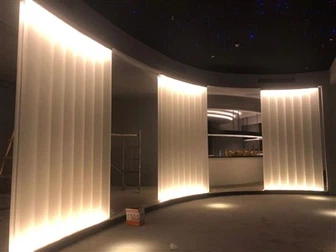
Types and precautions of sandblasted glass
With the continuous development of glass materials, the types of glass are increasing. Sandblasted glass is a relatively new type and is sought after by many customers. So, what is sandblasted glass? What are the types and precautions of sandblasted glass?
Sandblasted glass, as the name suggests, is a process of spraying corundum mixed with water on the glass at high pressure and then polishing it. It has the characteristics of novel design, simple and convenient construction, energy saving, good processing effect, and long service life. It is mostly used in indoor partitions, screens, bathrooms, furniture, doors and windows, etc., and is favored by customers.
There are many types of sandblasted glass, which can be divided into three categories: full sandblasted glass, striped sandblasted glass, and computer pattern sandblasted glass.
(1) Full sandblasted glass: It is a type of sandblasted glass, which sprays a layer of corundum on the inner layer of the glass. It is often used in the partitions of the bathroom to protect privacy.
(2) Striped sandblasted glass: As the name suggests, it is the striped pattern in the sandblasted glass. It has the characteristics of a flat, smooth, and shiny surface and is very popular among owners.
(3) Computer-patterned sandblasted glass: It is a sandblasted glass pattern made using computer technology. It is not only simple and convenient, but also very beautiful.
Precautions for sandblasted glass
(1) Proper distance: When installing sandblasted glass, we must place the spray gun and the glass at a proper distance, to avoid the glass from being broken due to the excessive force of the spray gun.
(2) Stable moving speed: When moving the spray gun on the glass, it must be steady, otherwise it is likely to cause uneven sandblasting and affect the overall beauty.
(3) Inspection: Before sandblasting, we must first check whether the nozzle is blocked, and then check whether the diamond abrasive pipe is blocked. If these problems exist, they must be cleaned in time to ensure uniform sand output.
(4) Observe the texture: After sandblasting, we can observe whether the carved texture is uniform from the back of the lamp. If the texture is uneven, we need to re-trim it, otherwise no trimming is required.
(5) Clean the remaining sand: After all the processes are completed, we tear off the engraving paper first and then clean the remaining sand nearby with clean water, but be sure to be careful not to leave the remaining sand on the glass surface to avoid scratching the glass surface.
The above is a detailed introduction to what is sandblasted glass, the types of sandblasted glass, and the precautions. I believe that you have an understanding of sandblasted glass, so you must pay more attention during construction to avoid damaging the beauty of the glass.