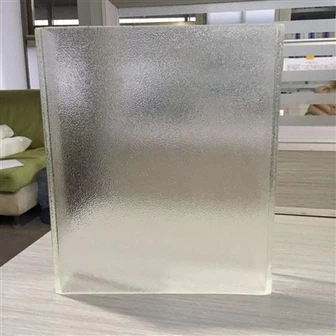
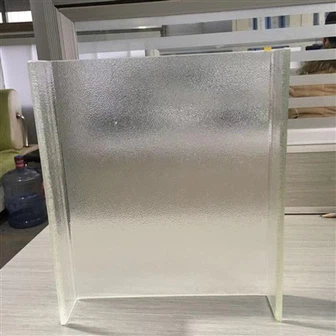
Laminated U-shaped glass as roof material
As a roofing material, U-shaped glass shows many advantages in the construction field due to its unique structure and performance. The following is explained in detail from multiple dimensions:
1. Advantages of light transmission and lighting
High light transmittance: The light transmittance of U-shaped glass can reach 75%-85% (depending on the thickness and material of the glass). Compared with traditional roofing materials (such as color steel plates with a light transmittance of about 50%), it can introduce more natural light into the room.
Uniform lighting: The U-shaped groove structure can diffuse light indoors, reduce glare caused by direct strong light, and improve lighting uniformity by about 30%. It is suitable for places with high light requirements (such as exhibition halls and greenhouses).
Energy-saving effect: It can reduce the use of artificial lighting during the day and reduce energy consumption; some U-shaped glass can be equipped with Low-E coating to transmit light while blocking ultraviolet rays (blocking rate exceeds 90%), reducing indoor furniture fading.
2. Structural and mechanical advantages
High-strength support: U-shaped glass has a "U"-shaped cross-section, a mechanical structure similar to channel steel, with a bending strength of up to 80-100MPa, and can withstand snow load (load bearing per square meter ≥ 1.5kN under standard design) and wind force (wind pressure resistance level is above level 9).
Large span and less support: The length of a single U-shaped glass is usually 3-6 meters, and the span can reach 2-3 meters. It does not require dense support structures, saves about 20%-30% of steel consumption, and reduces construction costs.
Lightweight and earthquake-resistant: The weight is about 1/5 of a concrete roof (U-shaped glass with a thickness of 19mm weighs about 25kg per square meter), reducing the overall load of the building and making it suitable for earthquake-prone areas.
3. Advantages of heat preservation and insulation
Hollow insulation structure: U-shaped glass can adopt a double-layer hollow design (for example, two pieces of U-shaped glass snap together to form an air layer), and the heat transfer coefficient (K value) can be reduced to 1.8-2.5W/(㎡·K), which is close to the performance of traditional thermal insulation walls. It reduces heat loss in winter and blocks outdoor high temperatures in summer.
Reduce condensation water: The hollow structure can reduce the temperature difference on the glass surface, and the probability of condensation water generation is reduced by about 50% compared with single-layer glass, making it suitable for humid areas or greenhouses.
4. Construction and installation advantages
Modular installation: U-shaped glass can be prefabricated into standard units and spliced on-site through slots or sealants. The installation speed is 30% faster than traditional glass curtain walls, shortening the construction period.
Flexible adaptability to shapes: Curved U-shaped glass can be customized according to the curvature of the roof (small bending radius is about 2 meters) to achieve curved, arched and other special-shaped roof designs to meet architectural aesthetic needs.
Easy maintenance: the surface is smooth and does not easily accumulate dust, and rainwater can wash it away naturally; if it is partially damaged, the single glass can be replaced independently without disassembling the overall structure.
5. Durability and environmental protection advantages
Strong weather resistance: Made of tempered glass or laminated glass, it has excellent anti-aging properties, has a service life of more than 50 years, and the light transmittance decreases by no more than 5% during long-term use.
Environmentally friendly and recyclable: The glass material itself is non-toxic and harmless, and can be 100% recycled and reused after disposal, complying with green building standards (such as LEED certification requirements).
Things to note
Waterproof sealing: Silicone sealant or rubber strips are required to waterproof the U-shaped glass joints to avoid rainwater leakage.
Impact resistance: If used in areas susceptible to external impact (such as rooftops with heavy traffic), it is recommended to use laminated U-shaped glass to enhance safety.
In short, the comprehensive advantages of U-shaped glass roofs in terms of light transmission, structure, energy saving and construction make it an ideal choice for modern buildings that take into account functionality and aesthetics.