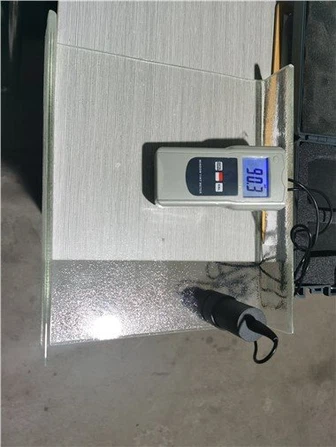
Introduction to the composition of U-shaped glass materials
U-shaped glass, also known as trough glass, is called U-shaped glass because of its U-shaped cross section. Quartz sand as the main raw material, through high temperature melting, rolling, annealing, cooling.
U-shaped glass material composition: U-shaped glass is mainly composed of the following four components.
1. Basic components
U-shaped glass contains four elements: silicon dioxide, sodium oxide, calcium oxide and magnesium oxide. Silica, the main component of glass, comes from quartz sand. Adding sodium oxide can reduce the melting point of silica material, and soda ash can provide a large amount of sodium oxide. Calcium oxide is another important component and is found in large quantities in limestone and dolomite. Magnesium oxide is often added to raw materials. Dolomite can provide a large amount of magnesium oxide.
2. Trace components
In addition to the above basic elements, U-shaped glass will also add some auxiliary materials as needed. Alumina is often used to effectively increase the moisture resistance of glass. Moreover, when producing U-shaped glass, adding iron red powder can effectively remove the bubbles formed by carbon dioxide in the raw material and make the glass more clear. However, iron red powder can not be used as raw material for ultra-white U-glass because of its coloring. Oxidants can also be added to make the glass more clear. Colorants can also be added to change the color of the glass, such as cobalt, selenium, and nickel.
3. Clarifier
In industrial production, a certain amount of sodium sulfate should be added to the glass raw material as a clarifying agent, which can effectively discharge the carbon dioxide and other gases contained in the liquid glass and make the glass more clear.
4. Broken glass
The purpose of adding broken glass to the raw material is to effectively reduce the melting point of the raw material and make it easier to process.
The above four kinds of raw materials are weighed and mixed in different proportions and sent to the melting kiln. After product forming, annealing, cooling and cutting, U-shaped glass is obtained. Industrial U-shaped glass can also be further processed, such as toughening, sandblasting, high temperature glaze, etc., in order to achieve the ideal effect.