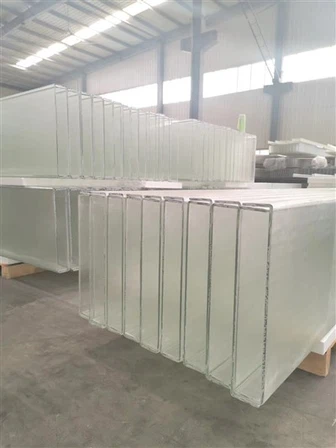
The main difference between explosion-proof glass and tempered glass
Explosion-proof glass is glass that can prevent violent impact. It is a special glass made by a machine using special additives and interlayers in the middle.
The main differences between explosion-proof glass and tempered glass are as follows:
1. Different features
(1) Explosion-proof glass: High safety: Because the PVB in the middle layer is tough and has strong adhesion, it is not easy to be penetrated after being damaged by impact, and the fragments will not fall off, and they are tightly bonded to the PVB film; more functions, compared with other glasses, it has functions such as shock resistance, anti-theft, bulletproof, explosion-proof, and UV protection; more energy-saving
(2) Tempered glass: Safety, when the glass is damaged by external force, the fragments will become small obtuse-angled particles similar to honeycombs, which do not easy to cause serious damage to the human body; high strength, the impact resistance of tempered glass of equal thickness is 3 to 5 times that of ordinary glass, and the bending strength is 3 to 5 times that of ordinary glass; thermal stability, tempered glass has good thermal stability, and the acceptable temperature difference is 3 times that of ordinary glass, and can accept a temperature difference of 300°C.
2. Different manufacturing principles
(1) Explosion-proof glass: Special glass made by machine processing using special additives and interlayers in the middle. Even if the glass is broken, it will not fall easily because the middle material (PVB film) or the explosion-proof glass on the other side has been fully bonded. Therefore, explosion-proof glass can greatly reduce the damage to personnel and valuables when subjected to violent impact.
(2) Tempered glass: Tempered glass is a prestressed glass. To improve the strength of the glass, chemical or physical methods are generally used to form compressive stress on the surface of the glass. When the glass is subjected to external force, the surface stress is first offset, thereby improving the bearing capacity and enhancing the glass's resistance to wind pressure, cold and heat, impact, etc.
3. Different uses
(1) Explosion-proof glass: Because explosion-proof glass has high impact resistance and safety of use, it is suitable for building ceilings, shower rooms, floors, partitions, skylights of industrial plants, shop windows, kindergartens, schools, gymnasiums, private residences, villas, asylums, banks, and other places.
(2) Tempered glass: widely used in doors and windows of high-rise buildings, glass curtain walls, interior partition glass, lighting ceilings, elevator passages, furniture, glass guardrails, etc.