Why do some U-shaped glass change color after exposure to sunlight?
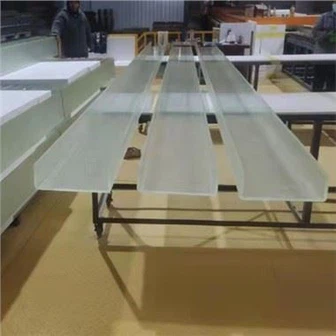
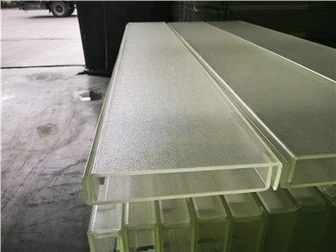
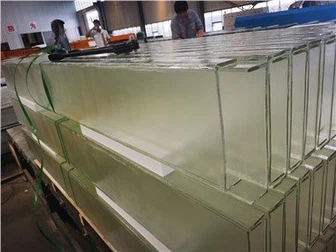
As a very common building decoration material, U-shaped glass, as shown in Figure 1, should not only meet the various functions required in architectural design, but also have good stability and durability, and can withstand wind and sun all year round. There will be no noticeable change.
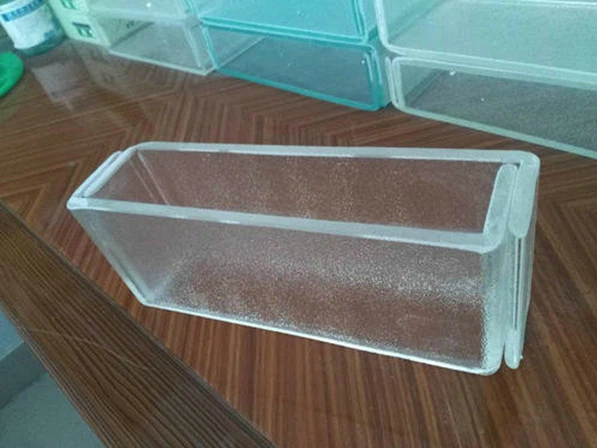
So why does U-shaped glass change color? In order to get an accurate answer, we tested several kinds of U-shaped glass. Before testing, we first need to clarify the following concepts:
1. Basic concepts
1. Reasons why objects appear colored
Objects in nature can be divided into two categories: luminous objects and non-luminous objects according to whether they can emit light. Non-luminous objects are divided into transparent and opaque objects. The color of an opaque body is determined by the shade it reflects; the color of a transparent body is determined by the shade it transmits. U-shaped glass is a transparent body. If we see a piece of U-shaped glass appearing green, it is because it absorbs red and blue light, and finally the green light enters our eyeballs.
The most common light source in daily life is the sun. As we all know, the solar spectrum is divided into two parts, visible light and invisible light. The wavelength of visible light is 380-780nm, as shown in Figure 6, after scattering, it is divided into seven colors: red, orange, yellow, green, blue, blue, and purple; invisible light is divided into two types, and the wavelength greater than red light is called Infrared rays, which have wavelengths shorter than violet light, are called ultraviolet rays. Our eyes can only see visible light.
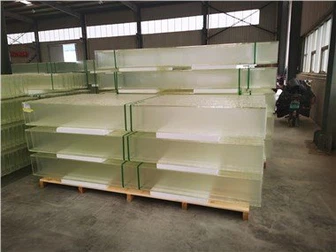
As mentioned earlier, the color of a U-glass depends on the color of the visible light transmitted by the U-glass. So, what determines the color of visible light transmitted by U glass? It also starts with the composition of U glass. Glasses with different components have different colors, such as ordinary glass and ultra-clear glass in Figure 7.
2. Composition and aging reasons of U glass
In industrial production, the main raw material sand of U glass contains a certain amount of iron element, and ferrous ions (Fe2+) will absorb visible light in the blue and red bands, allowing more green light to pass through, which will cause this The produced U glass is greenish. In order to compensate for the impact of high iron content on the glass, some manufacturers will add rare earth oxidizers (cerium dioxide) to the raw materials, but this will make the glass appear yellowish. In order to synthesize the yellow-green color brought by rare earths, compounds such as selenium, rubidium or manganese must be added, which can produce purple or purple-red in U glass, which just complements the yellow tone [1]. After these adjustments, the glass is no longer the ideal "colorless lens", but presents a "white fog color". Although the U glass produced in this way is no longer greenish, it greatly reduces the light transmittance of the U glass, making the U glass no longer transparent but white. The more serious problem is that the rare earth oxidant will be exposed to the ultraviolet rays of the sun. Under the action of exposure to the sun, if it is used as a building glass curtain wall or exterior wall, U glass will change color within 1 to 2 years and lose its original luster. Due to the different degrees of sunlight on the glass curtain wall of the building, the color difference of the same curtain wall will appear after several years of exposure.
"Solarization is a physical phenomenon, which means that when the material is irradiated by high-energy electromagnetic waves, the color will change. Common high-energy electromagnetic waves include ultraviolet rays and X-rays, and common materials that will undergo solarization include glass and Plastic." - Wikipedia
3. Why does float glass not change color?
Because most of the building curtain walls use plain white float glass, it is not necessary to add oxidants to the glass raw materials, so there is no change in the valence of oxidants under the action of ultraviolet rays. Ultra-clear float glass is basically produced by large float glass manufacturers, and no cheap oxidants or bleaches are added, so it is rare to change color after exposure. In order to save raw material costs, some U-shaped glass manufacturers add cheap glass bleaching agents, and glass discoloration is inevitable.
2. U glass aging test
In order to further verify the problem of glass discoloration, we tested the U-shaped glass on the market. There are two key points in the U glass aging experiment in this experiment. One is to realize the exposure effect through the UV weather resistance test box, and to age the U glass samples from different manufacturers. Later, the transmittance of visible light of different wavelengths on each piece of U glass was measured.
We used three kinds of U glass samples. In addition to the U glass produced by Appleton (marked as ASG), we also compared two U glass produced by other U glass manufacturers on the market, marked as A and B respectively. We cut the U glass of the three manufacturers into two small pieces, one piece was properly preserved as a standard sample, and the other piece was put into a UV weather resistance test box. After a certain period of accelerated aging, the light transmittance was measured with a photometer, and finally obtained It can reflect the degree of aging and discoloration of U glass.
1. UV weathering test chamber
This experiment uses a 313 lamp type UV weathering test chamber, as shown in Figure 9, equipped with 2 UVB-313 ultraviolet lamps. The short-wave ultraviolet light emitted by the UVB-313 lamps is stronger than the solar ultraviolet rays that usually irradiate the earth's surface. In this way, the aging of the material can be accelerated to the greatest extent. The amount of ultraviolet light irradiated every 24 hours is equal to the amount of ultraviolet light irradiated in the outdoor environment for 3 months. By analogy, we irradiated the glass for 480 hours and 960 hours respectively to simulate 5 years and Aging status of U-glass after 10 years.
2. Shimadzu UV-Vis-NIR Spectrophotometer SolidSpec-3700/3700DUV
In this experiment, Shimadzu UV-Vis-NIR Spectrophotometer SolidSpec-3700/3700DUV was used, as shown in Figure 5. Shimadzu, as the world's most important manufacturer of spectroscopic instruments, developed the UV-Vis-IR spectrophotometer SolidSpec-3700/3700DUV with a very wide test range, and the SolidSpec-3700/3700DUV uses an integrating sphere as the detection unit and integrates 3 detection The instrument is on the integrating sphere, which greatly enhances the measurement accuracy.
3. Experimental data processing
After performing the 960-hour aging test as described above, we can draw the following light transmittance curve. The blue curve is the U-glass produced by ASG, and the yellow and gray curves are the U-glass produced by two U-glass manufacturers A and B.
ASG has the best overall light transmittance, followed by A, and B is the worst. At the same time, it is not difficult to see that the light transmittance of the red band of B glass is significantly lower than that of the blue-green band, so this glass will look obviously blue-green.
After five years of ultraviolet radiation, the overall light transmittance of ASG is still the best, and the color change is also small. However, the U glass of A and B shows that the visible light transmittance in the band near purple drops significantly, which will lead to The U glass discolored, showing a dull yellow-brown color.
Ten years later, the change is more obvious. The light transmittance of visible light near the ultraviolet wavelength even drops out of the chart when it passes through the U glass of A. In this way, the color change of U glass will inevitably be more obvious.
We might as well do a data comparison, calculate the difference in the light transmittance drop of each piece of glass after the aging test, and then draw it into an icon, so that we can intuitively see how much the light transmittance of each piece of glass has changed compared to the original after aging Variety.
After ten years of aging, the transmittance changes of the three U glasses shown in Table 5 are similar to those in Table 4, ASG still has the smallest change, and A still has the largest change. You may wish to draw the A correlation curve in a table, as shown in Table 6. It can be seen that the light transmittance of the U glass numbered A has dropped significantly after 5 years of exposure, especially the light transmittance in the band near the purple visible light has a cliff In this way, the discoloration of U glass will inevitably be very obvious.
3. Experimental summary
To sum up, it is not difficult to find that the main difference between U-glass produced by different manufacturers is the light transmittance when they leave the factory. Good-quality U-glass has high light transmittance and is crystal clear, while poor-quality U-glass looks like It is covered with a layer of white mist, and the transparency is not ideal. However, after years of sunlight exposure, the light transmittance will change to varying degrees. The greater the value of the change, the more obvious the color change of the glass. There is a proper assessment of the condition of the glass after many years.