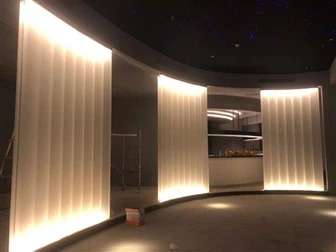
Architectural Design with U-Profile Glass
Sep 18, 2026
- U-profile glass comes in various types based on surface treatment, such as standard patterned glass and colored glass; specifications must clearly indicate the choice of any type other than standard patterned glass.
- U-profile glass is a non-combustible material; designs involving special requirements must comply with relevant standards.
- Classification of U-profile glass:
- By color: Colored and colorless.
- By surface finish: Smooth and patterned.
- By strength/performance: Tempered, film-coated, and thermally insulated types.
- By specification: Tempered, film-coated, and thermally insulated types.
- U-profile glass is a non-combustible material; designs involving special requirements must comply with relevant standards.
- Testing regarding the orientation of the U-profile glass flanges indicates that structural strength is higher when the flanges face the windward side compared to the leeward side.
- U-profile glass is assembled in various ways depending on the configuration and intended architectural function:
- When the length of a U-profile glass partition exceeds 6,000 mm or the height exceeds 4,500 mm, the stability of the wall assembly must be verified and appropriate measures taken.
- When U-profile glass is used in rooms with high humidity and significant indoor-outdoor temperature differences, proper drainage and management of surface condensation (dew) must be addressed.
- When U-profile glass is used for curved walls or roofing, the radius of curvature must not be less than 1,500 mm.
- For detailed connection designs, please refer to the national standard atlas "Standard for U-Profile Glass Exterior Cladding" (06J501).
Previous: No Information