Why is U-shaped glass so widely used in architecture?
Glass is an indispensable material in modern architecture. Many people often imagine it as flat, primarily used for doors, windows, and curtain walls. However, with the development of the construction industry, more and more new materials are emerging and gaining widespread application. For example, the emergence of U-shaped glass allows buildings to achieve complex curves, giving designers greater creative freedom.
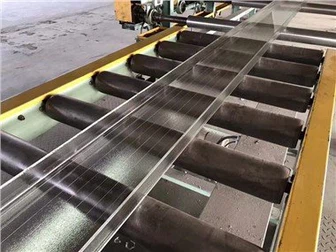
U-shaped glass is continuously produced using a rolling and then forming process, resulting in a U-shaped cross-section. It is a novel architectural glass profile with nearly 40 years of production and application history abroad, and is adopted in urban and rural buildings in many countries around the world.
U-shaped glass is widely used in the construction industry and offers advantages over other glass materials. Due to its U-shaped cross-section, it possesses greater mechanical strength than ordinary flat glass.
Grooved glass offers high mechanical strength. Using interlayered steel wire, grooved glass provides excellent safety protection for the walls of mid- to high-rise buildings. It is also highly resistant to acids, alkalis, and high humidity. Therefore, grooved glass can be used in buildings requiring corrosion resistance, and it is also easy to assemble.
As a wall or roof material, it can be installed vertically, on a slope, in single or double rows. It can be used as a large glass curtain wall in large buildings, which can greatly increase the lighting area. It has multiple functio,ns such as decoration and structural, and is a multi-purpose building component.