

How to test the quality of U Shaped Profile Glass?
Hey there! As a supplier of U Shaped Profile Glass, I've seen firsthand how important it is to ensure the quality of this unique building material. U Shaped Profile Glass, also known as U Channel Glass, is a popular choice for architects and designers due to its versatility, durability, and aesthetic appeal. But how do you test its quality? Well, let's dive right in and find out!
Visual Inspection
The first step in testing the quality of U Shaped Profile Glass is a simple visual inspection. You don't need any fancy equipment for this one – just your eyes! Start by looking for any obvious defects on the surface of the glass. This includes cracks, scratches, bubbles, or any other irregularities. Cracks can seriously compromise the structural integrity of the glass, while scratches can affect its appearance and potentially its performance over time.
Bubbles, on the other hand, might seem like a minor issue, but they can weaken the glass and cause it to break more easily under stress. When you're checking for these defects, make sure to look at the glass from different angles and in good lighting conditions. This will help you spot any flaws that might be hidden in the shadows.
Thickness and Dimensions
Next up, you'll want to measure the thickness and dimensions of the U Shaped Profile Glass. This is crucial because the glass needs to meet the specified requirements for your project. You can use a caliper or a micrometer to measure the thickness accurately. The thickness of the glass can affect its strength, insulation properties, and overall performance.
In addition to the thickness, you also need to check the width, height, and length of the U Shaped Profile Glass. These dimensions should match the specifications provided by the manufacturer. Any deviations from the standard dimensions can lead to installation problems and might not fit properly in your project. For example, if the glass is too wide or too tall, it might not fit into the frame, and if it's too short or too narrow, it might not provide the necessary coverage or support.
Strength and Durability
Testing the strength and durability of U Shaped Profile Glass is a bit more involved than a visual inspection or measuring the dimensions. One common method is the impact test. In this test, a small object is dropped onto the glass from a certain height to simulate a real-life impact. The glass should be able to withstand a certain amount of force without breaking or cracking.
Another important aspect of strength and durability is the glass's resistance to bending. U Shaped Profile Glass is often used in applications where it needs to support its own weight and withstand external forces. You can perform a bending test by applying a gradual load to the glass and measuring how much it deflects. The glass should not deflect too much or break under the load.
Optical Properties
The optical properties of U Shaped Profile Glass are also important, especially if you're using it for applications where visibility or light transmission is a concern. One of the key optical properties is the clarity of the glass. You can check the clarity by looking through the glass and making sure there are no distortions or discolorations.
Another important optical property is the light transmission rate. This refers to the amount of light that can pass through the glass. You can use a light meter to measure the light transmission rate. A high light transmission rate is desirable in applications where you want to maximize natural light, such as in curtain walls or skylights.
Chemical Resistance
U Shaped Profile Glass might be exposed to various chemicals in its lifetime, depending on its application. Therefore, it's important to test its chemical resistance. You can do this by exposing a small sample of the glass to different chemicals and observing how it reacts. The glass should not be damaged or corroded by the chemicals.
For example, if the glass is going to be used in a building where it might come into contact with cleaning agents or other chemicals, it needs to be able to withstand these substances without losing its strength or appearance.
Fire Resistance
Fire resistance is another important factor to consider when testing the quality of U Shaped Profile Glass. In many building codes, there are specific requirements for the fire resistance of building materials, including glass. You can test the fire resistance of U Shaped Profile Glass by subjecting it to a fire test.
During the fire test, the glass is exposed to high temperatures for a certain period of time. The glass should be able to maintain its integrity and prevent the spread of fire and smoke for a specified amount of time. This is crucial for the safety of the building and its occupants.
Energy Efficiency
In today's world, energy efficiency is a top priority for many building projects. U Shaped Profile Glass can contribute to the energy efficiency of a building by providing insulation and reducing heat transfer. You can test the energy efficiency of the glass by measuring its thermal conductivity.
A low thermal conductivity means that the glass is a good insulator and can help keep the building warm in the winter and cool in the summer. You can use a thermal conductivity meter to measure the thermal conductivity of the glass.
Noise Reduction
If you're using U Shaped Profile Glass in an area where noise reduction is important, such as in a commercial building or a residential property near a busy street, you'll want to test its noise reduction properties. You can do this by using a sound level meter to measure the amount of noise that is blocked by the glass.
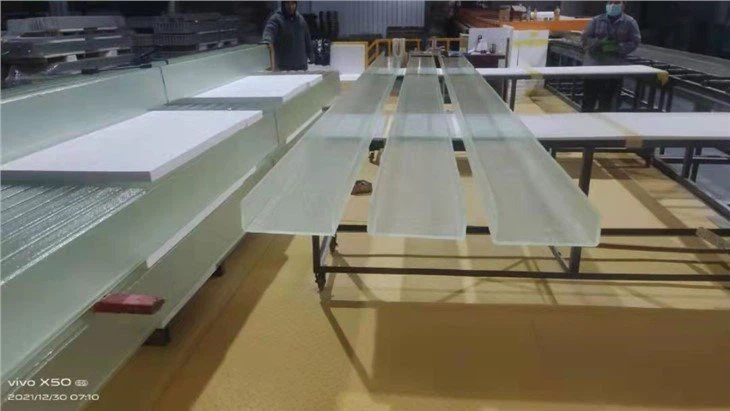

A good U Shaped Profile Glass should be able to reduce noise levels significantly, creating a more comfortable and peaceful environment inside the building.
Installation and Compatibility
Finally, it's important to test the installation and compatibility of U Shaped Profile Glass. The glass should be easy to install and should fit properly with the other building materials and components. You can test the installation process by trying to install a sample of the glass in a mock-up frame.
During the installation, make sure to check for any issues, such as gaps, misalignments, or difficulties in securing the glass. The glass should also be compatible with the sealants, adhesives, and other materials that will be used in the project.
Conclusion
Testing the quality of U Shaped Profile Glass is a comprehensive process that involves checking various aspects, including visual inspection, thickness and dimensions, strength and durability, optical properties, chemical resistance, fire resistance, energy efficiency, noise reduction, and installation and compatibility. By performing these tests, you can ensure that the glass you're using meets the highest standards and will perform well in your project.
If you're in the market for high-quality U Shaped Profile Glass, we've got you covered! We offer a wide range of products, including Clear Patterned U Channel Glass, 7mm Low Iron U Profile Glass, and Low Iron U Glass For Curtain Wall. Our products are rigorously tested to ensure the highest quality and performance.
If you have any questions or would like to discuss your project requirements, please don't hesitate to get in touch. We're here to help you find the perfect U Shaped Profile Glass for your needs.
References
- ASTM International. (Year). Standard test methods for glass.
- ISO. (Year). International standards for glass testing.
- Glass Association of North America. (Year). Guidelines for glass quality testing.